5 Cloud Trends Reshaping Technology Landscape: Reflections From Re:invent 2021
AWS has come a long way since its introduction in 2006 with about ~60B in revenues and ~30% growth rate today. To put into perspective the magnitude and rate at which AWS is growing — it’s roughly adding the total revenue of Workday and ServiceNow combined annually.
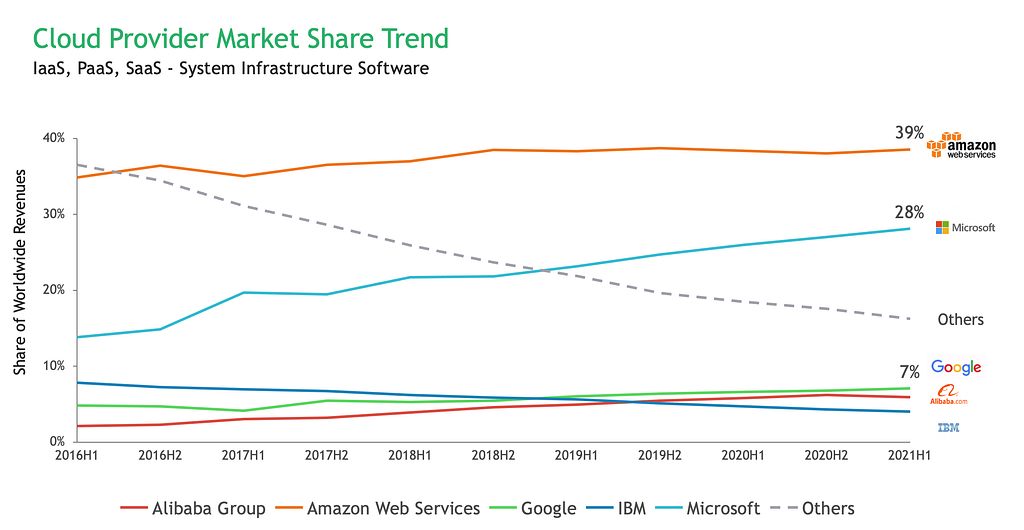
With 1M customers in 190 countries and 8K partners it’s hard to stop the AWS juggernaut. This year’s keynote was much of the same as before, AWS continues to innovate, but the number of new product announcements was more measured vs. previous years.
The five key cloud trends reshaping technology
Trend 1: Custom Silicon and the vertically integrated platform paradigm
The big news coming out of AWS was the ARM based Graviton3 processor. Graviton3 is a step change over Graviton2 — 25% faster, with 2x faster floating-point performances and 3x performance improvement for machine-learning workloads. More importantly, it will do this at 60% less power. To build the software and platform ecosystem AWS also announced announce the new AWS Graviton Ready Program for AWS Partners with software products that support AWS Graviton-based Amazon Elastic Compute Cloud (Amazon EC2) instances.
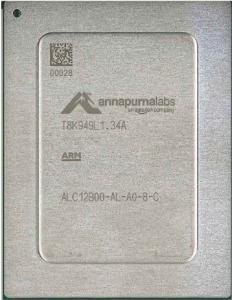
AWS also has Inferentia, a chip specifically designed for AI based inferencing workloads — which delivers 2.3x higher throughput and up to 70% lower cost per inference than comparable current generation GPU-based Amazon EC2 instances.
So what?
At scale this can be hugely strategic for AWS.
First, getting a better price/performance can enable AWS to extract better economics, and put pricing pressure on other hyperscalers.
Second, as stacks continue to get vertically integrated, we might see the emergence of a new, more sticky cloud “platform architectures” e.g. applications optimized for AWS or GCP. While customers don’t want to get locked into a vendor, the economic benefits of building on a vertically integrated stack might outweigh the benefits of being vendor neutral. We are already starting to see competitive response. Google, for example, has already announced that will design its own ARM based SoCs so we will expect this trend to continue.
Third, this could usher in a new era for ARM in the datacenter.
It will be interesting to see how this trend plays out and its impact on other cloud vendors, semiconductor and chip manufacturers and the future of software and enterprise architectures.
Trend 2: Pricing and business model innovation
One of the biggest economic value propositions of cloud is pay-as-you-go pricing or the ability to pay only what you use, and when you use. While this notion started with infrastructure e.g. compute and storage, and then expanded into transactional services and APIs e.g. payments, messages etc. AWS took this paradigm to a new level with function/server less compute and also database services and announcement of Aurora serverless, which bills database resources in fine grained increments.
Amazon Aurora Serverless v2, currently in preview, scales instantly from hundreds to hundreds-of-thousands of transactions in a fraction of a second. As it scales, it adjusts capacity in fine-grained increments to provide just the right amount of database resources that the application needs. There is no database capacity for you to manage, you pay only for the capacity your application consumes, and you can save up to 90% of your database cost compared to the cost of provisioning capacity for peak load.
They have extended serverless pricing this year to multiple analytics services including Redshift, Kinesis, Elastic Map Reduce and Managed Kafka Service (MKS).
So What?
First, because hyperscalers provide both infrastructure (IaaS) and platform (PaaS) services, it gives them more ways and layers to monetize their services. E.g. AWS has multiple services you can consume for free, only paying for the underlying infrastructure resources. Second, “micro” and serverless pricing at very large scale becomes more viable. As a 60B/yr company with ~40% market share in cloud, AWS can drive attractive gross margins, and continue to build scale by leveraging bundled economics and heavily discounting up-stack platform services.
These dynamics puts enormous pricing pressure and creates a structural margin disadvantage for middleware, DevOps and other platform players. These companies will not only increasingly adopt serverless pay-as-you-go pricing e.g. MongoDB serverless pricing in review, Datastax Astra etc., but will also need to find ways to sufficiently differentiate, in order to overcome margin gap.
What is also interesting is to see how these pricing models are impacting software architecture in general, and the growth of serverless architectures to improve application margins, particularly for seasonal and spiky workloads.
Trend 3: Expansion from the datacenter to private cloud and edge
There are four vectors/modalities of compute and workload growth.
1. Cloud computing data centers. (~40% of workloads)
2. Telco/access and metro edge (~10% of workloads)
3. Far or “rugged” edge (<10% of workloads today)
4. Core on-premise and data center (~40% of workloads)
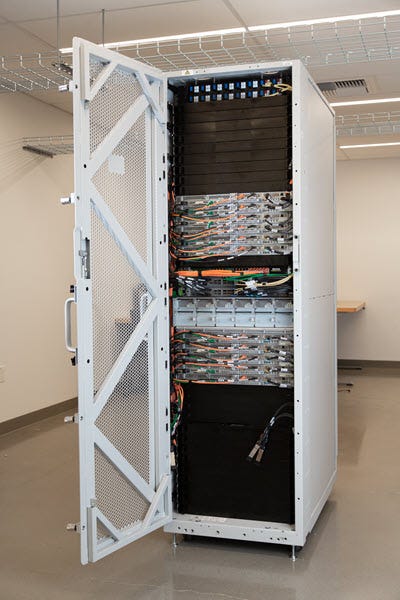
It’s an imperative for cloud vendors to expand outward from cloud data centers to help bridge some traditional, hard to move workloads for their customers and also to capture share of wallet in more strategic, and emerging edge workloads. AWS is no different. In addition to their IoT platform Greengrass, AWS finally jumped on the private cloud bandwagon by announcing AWS outposts, and also partnered with telcos like Verizon to bring AWS Wavelength to market a couple of years ago. For rugged edge AWS provides an array of Snow devices.
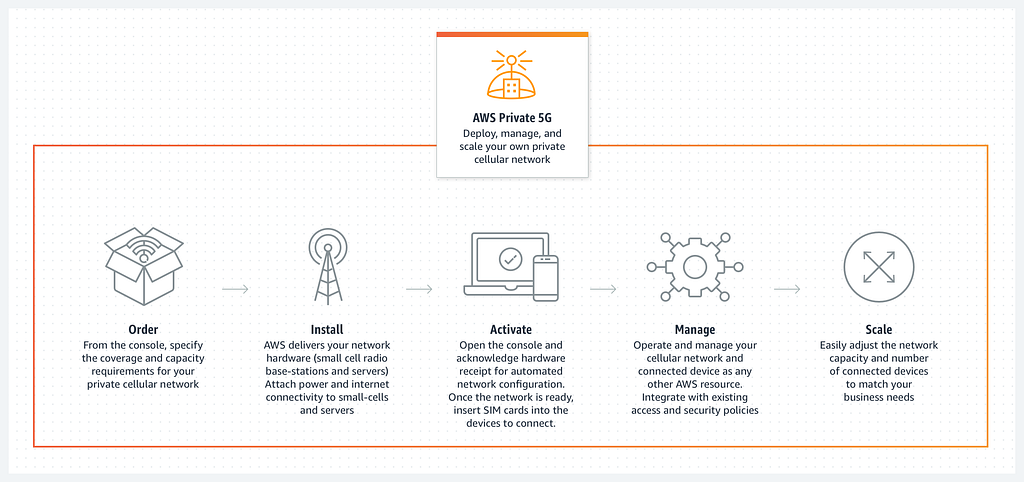
The big and disruptive announcement coming out of Re:invent this year was a preview of a fully managed private 5G service, for industrial IoT and edge use-cases.
Additionally AWS also announced it’s intent to go after the most sacrosanct on-premise workload of all — mainframe. The AWS mainframe services provides customer the ability to compile COBOL to Java and provides an array of ancillary automation services including testing and migration to help modernize mainframe applications.
So what?
First, on-premise cloud platforms are disrupting and changing the competitive dynamics on-prem. They help “seed” cloud for enterprises that still want to innovate on-premise, giving enterprise customers the optionality to bridge to cloud over time. It also brings native AWS services like RDS, S3 etc. on-premise and the number of services are available on private clouds are growing. This trend creates a challenge for both traditional hardware vendors like Dell, Cisco and NetApp, as well as traditional software vendors like Oracle and IBM — who can potentially see their traditional areas of strength depleted. It will be interesting to see this space evolves, and what cloud services Google and Microsoft bring to market on Azure Stack and Anthos.
Second, AWS private 5G service is hugely disruptive. For enterprise customers this can unlock innovation like never before. A pay-as-you-go, fully managed service means significantly lower upfront capex and an opinionated, software defined and fully integrated app stack means much faster time to market and ability to let the experts handle rolling out and operating a 5G network. For telcos and communication tech providers like Nokia and Ericsson (who provide managed private 5G services), this is a threat and also an opportunity. While the details of this service are fuzzy, it will shift the value pools, business models and economics of enterprise private 5G, for all players — similar to what cloud did for traditional IT. It’s also interesting to see the competitive response from other cloud vendors — e.g. Microsoft, which could potentially bring a similar service to market, leveraging Affirmed and Metaswitch.
Last, the AWS mainframe service is bold, and it does provide AWS an opportunity to sink it’s teeth into difficult to move on-premise workloads. It’s unclear, however, if the service can help customers overcome the economic and risk hurdles to migrate their mission critical mainframe workloads. It will be interesting to see if such offerings are able to meaningfully shift the trajectory of mainframe modernizations.
Trend 4: Expansion up-stack into domains and verticals; New enterprise partnership paradigm
The process of verticalization and specialization is the natural next step and evolution of cloud maturity- what started off as purely horizontal infrastructure services, first evolved into platform and middleware services and then more specialized services along horizontals (AWS Pinpoint), verticals (AWS health lake) and also specialized applications (AWS Contact center). Like other players, AWS is aggressively going after different verticals — particularly healthcare, financial services, industrial manufacturing, automotive and retail.
There were a couple of big announcements from this years re:invent.
AWS IoT Fleetwise for large scale automotive data collection and analytics.
AWS partnership with Goldman Sachs to crate a financial services cloud. The details here are a little fuzzy — but it seems like a one stop shop for first and third party data aggregation, analytics and transaction and commercial banking platform products from Goldman Sachs.
So what?
As cloud computing continues to mature and services get commoditized, industry clouds and solutions become important vectors for differentiation not just for cloud vendors, but for platform players more broadly e.g. in integration Mulesoft and other analytics like Databricks and this trend will only accelerate. We saw a bunch of industry cloud announcements come out of Microsoft last year at Code, and this trend will only continue. This is also good news for enterprise customers and helps customers across verticals accelerate their path to cloud, and achieve faster speed to value.
The partnership with Goldman Sachs is a particularly interesting play for two reasons. First, this is an interesting case study and a template for large enterprises to commercialize technology developed internally, a real symbiotic relationship. Second, it provides cloud platforms a template to leverage deeper alliances as a way to bring vertical innovation offerings to market. In fact we are starting to see a new era of strategic enterprise and CSP partnerships. E.g. Azure and Chevron, GCP and CME (Chicago Mercantile Exchange). Most enterprises are looking for CSPs to (a) tailor/customize their offerings (b) co-innovate with the customer (c) invest in the customer
Will these partnerships create a new breed of competitors in technology? Time will tell.
Trend 5: Continued technology commoditization for all personas
Cloud has without doubt made technology more accessible to developers and startups, leveling the playing field and dramatically shifting the economics of building software applications. This isn’t news. There is a spectrum of higher level dev focused platform services from AWS e.g. Amplify and Beanstalk that help accelerate speed to market.
The more interesting trend today is the shift of focus to personas outside developers and the growing influence of “business technologists” and citizen developers/data scientists.
AWS is responding and announced AWS Honeycode, their low code/no-code platform in 2020. Quicksight Q became generally available earlier this year, giving business users the ability to drive data insights using conversational questions.
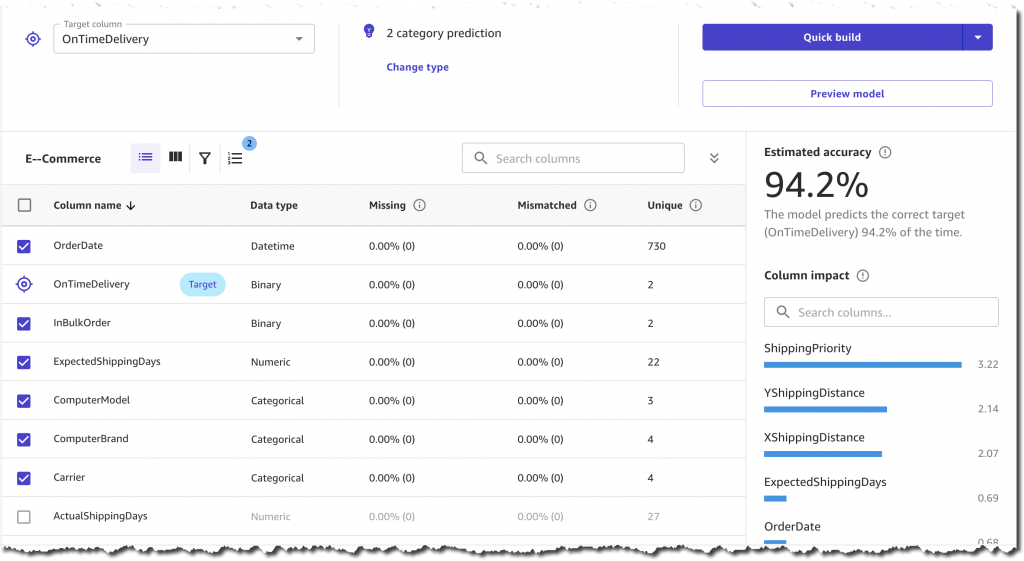
The big announcement this year was AWS Sagemaker Canvas, a visual, No Code Machine Learning Capability for Business Analysts. With this, AWS formally entered the AutoML space, as technology vendors continue to commoditize AI.
So What?
Cloud hyperscalers have helped intensify competition and speed of innovation in software. At no point has technology been so accessible as it is today. Tiny engineering teams can create consumer scale apps, mission critical services and out-compete larger traditional players. Things like web scale data processing, large scale computing on specialized hardware etc., are available for purchase online, from anywhere in the world with no upfront capital expenses and zero lead times. The economics of bringing new products to market are continuing to get better and companies that aren’t keeping up, will get left behind, faster than ever before.
Second, software development is itself getting commoditized, with the increasing influence of business users and rapid growth of low-code/no-code. The trend is creating new markets e.g. AutoML and RPA and disrupting traditional ones e.g. data integration. The market entry of hyperscalers is creating a challenge for pure plays e.g. Sagemaker Canvas competes with DataRobot in AutoML, and Microsoft Power Automate competes with UIPath and Automation Anywhere in RPA etc. This is also forcing enterprises to fundamentally re-think skills mix, and problem solve operating model, governance and solution proliferation coming out of such tools.
If you really peel the layers of the cloud onion, the biggest story is the economies of scale and the market power of the hyperscalers today. How do other technology companies overcome the structural moats that hyperscalers have created, the seemingly infinite access to talent and capital and the massive ecosystem of developers and partners that are invested on these platforms. Are swaths of technology markets out of reach for other players? The answer is nuanced and multiple companies have found a way to stay relevant. Some are beating hyperscalers by coming to market with stronger offerings e.g. Snowflake in cloud based data warehousing. Others are posturing to solve challenges with “multi-cloud” and winning on the church vs. state value prop e.g. RedHat and Zscaler. Others like Verizon and VMWare are partnering and riding the cloud tailwinds.
Cloud is certainly the tide that is continuing to rise all boats, and the speed of innovation isn’t slowing down anytime soon. Sit back and enjoy the continued disruption, new ecosystem partnerships, and the continually morphing technology landscape — the movie has just begun.